

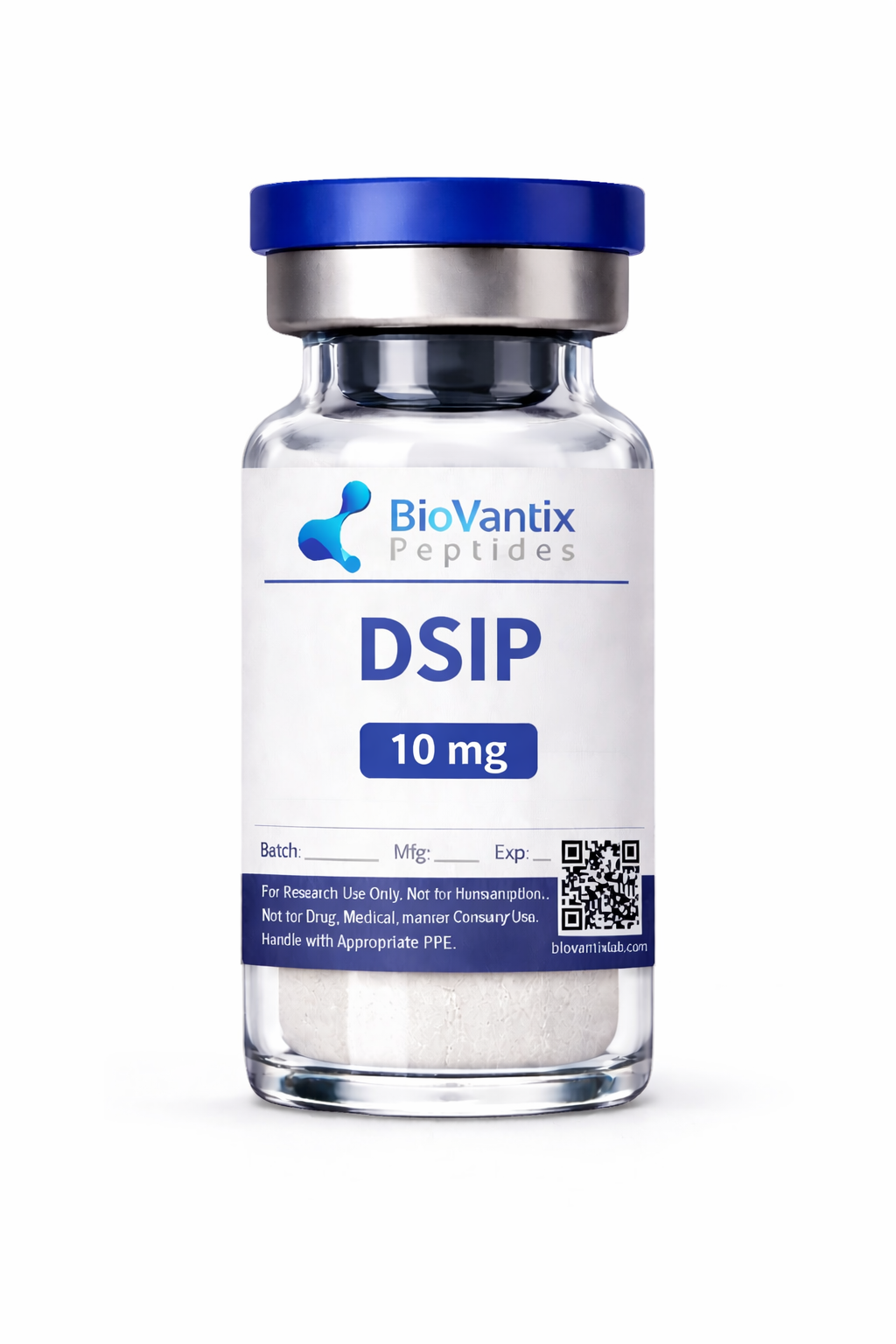
DSIP 10mg
DSIP (Delta Sleep–Inducing Peptide) is a naturally occurring neuropeptide composed of nine amino acids that has been studied in experimental models for its potential involvement in the regulation of sleep architecture and circadian rhythms. Initially identified in association with delta-wave sleep activity, DSIP has been investigated for its interaction with central nervous system pathways that influence sleep regulation, stress response, and neuroendocrine signaling.
In research settings, DSIP has also been explored for its possible effects on hormonal modulation within the hypothalamic–pituitary axis, including interactions with growth hormone, luteinizing hormone, and cortisol-related pathways. Additional studies examine how this peptide may influence physiological processes such as stress adaptation, metabolic balance, and neural signaling, though its precise mechanisms of action remain under investigation in controlled experimental contexts.
$118.00 Original price was: $118.00.$90.00Current price is: $90.00.
Out of stock
All Peptides
Popular Peptides
Peptide Capsules
Peptide Blends
IGF-1 Proteins
Bioregulators
Cosmetic Peptides
Melanotan Peptides
What Is DSIP?
Delta Sleep–Inducing Peptide (DSIP) is an endogenous neuropeptide composed of nine amino acids that has been investigated in biochemical and neurophysiological research for its potential role in sleep regulation and neuroendocrine signaling. Originally identified in association with delta-wave sleep activity, DSIP has been studied in experimental models for its interaction with pathways involved in circadian rhythm modulation, stress response, and central nervous system signaling.
Within laboratory contexts, DSIP is frequently examined for its potential influence on neuroendocrine communication between the hypothalamus, pituitary gland, and peripheral hormonal systems. Researchers have explored how this peptide may interact with signaling mechanisms related to sleep architecture, stress adaptation pathways, and metabolic regulatory processes.
Across experimental models, DSIP has been associated with changes in endpoints commonly evaluated in sleep and neuroendocrine research, including circadian rhythm activity, hormonal signaling pathways, and stress-response markers. These observations are interpreted through biochemical pathway interactions rather than as claims of applied use.
DSIP
Structure
Peptide Class: Nonapeptide neuropeptide
Amino Acid Sequence: Trp-Ala-Gly-Gly-Asp-Ala-Ser-Gly-Glu
Molecular Formula: C35H48N10O15
Molecular Weight: 848.8 g/mol
CAS Number: 62568-57-4
Synonyms: Delta Sleep–Inducing Peptide, DSIP
DSIP is a short-chain peptide consisting of nine amino acids arranged in a specific sequence that allows it to interact with biochemical pathways associated with sleep regulation and neuroendocrine signaling. The peptide’s structure enables it to participate in molecular signaling processes studied in laboratory models of circadian rhythm regulation and stress-response pathways.
Due to its small size and peptide composition, DSIP has been investigated in biochemical studies examining peptide-mediated signaling within central nervous system regulatory networks.
Source: PubChem
DSIP
Research
DSIP is commonly examined in laboratory research focused on sleep physiology, neuroendocrine communication, and stress-response pathways. Experimental studies frequently explore how this peptide interacts with signaling systems involved in circadian rhythm regulation and hormonal modulation.
Common research endpoints include:
- sleep architecture and delta-wave activity
- circadian rhythm signaling pathways
- hypothalamic–pituitary hormonal regulation
- stress-response biomarkers
- neuroendocrine signaling mechanisms
In experimental models, DSIP has also been investigated in relation to hormonal activity associated with growth hormone, cortisol, and luteinizing hormone signaling pathways. These studies aim to better understand the biochemical interactions that may influence physiological regulation of sleep and stress adaptation.
Referenced Citations
[1] Graf MV, Kastin AJ.
Delta sleep-inducing peptide (DSIP): an update.
https://pubmed.ncbi.nlm.nih.gov/3518537/
[2] Monnier M, et al.
Isolation and characterization of a sleep-inducing peptide.
https://pubmed.ncbi.nlm.nih.gov/4477925/
[3] Kastin AJ, et al.
DSIP and its possible physiological functions.
https://pubmed.ncbi.nlm.nih.gov/6120450/
[4] PubChem.
Delta Sleep-Inducing Peptide compound summary.
https://pubchem.ncbi.nlm.nih.gov/compound/Delta-Sleep-Inducing-Peptide
[5] Pandi-Perumal SR, et al.
Neurobiology of sleep regulation and peptide signaling.
https://pubmed.ncbi.nlm.nih.gov/18702617/
Storage Instructions:
All of our products are manufactured using the Lyophilization (Freeze Drying) process, which ensures that our products remain 100% stable for shipping for up to 3-4 months.
Once the peptides are reconstituted (mixed with bacteriostatic water), they must be stored in the fridge to maintain stability. After reconstitution, the peptides will remain stable for up to 30 days.
Lyophilization is a unique dehydration process, also known as cryodesiccation, where the peptides are frozen and then subjected to low pressure. This causes the water in the peptide vial to sublimate directly from solid to gas, leaving behind a stable, crystalline white structure known as lyophilized peptide. The puffy white powder can be stored at room temperature until you’re ready to reconstitute it with bacteriostatic water.
Once peptides have been received, it is imperative that they are kept cold and away from light. If the peptides will be used immediately, or in the next several days, weeks or months, short-term refrigeration under 4C (39F) is generally acceptable. Lyophilized peptides are usually stable at room temperatures for several weeks or more, so if they will be utilized within weeks or months such storage is typically adequate.
However, for longer term storage (several months to years) it is more preferable to store peptides in a freezer at -80C (-112F). When storing peptides for months or even years, freezing is optimal in order to preserve the peptide’s stability.
For further information on proper storage techniques, click the link below:
Peptide Storage